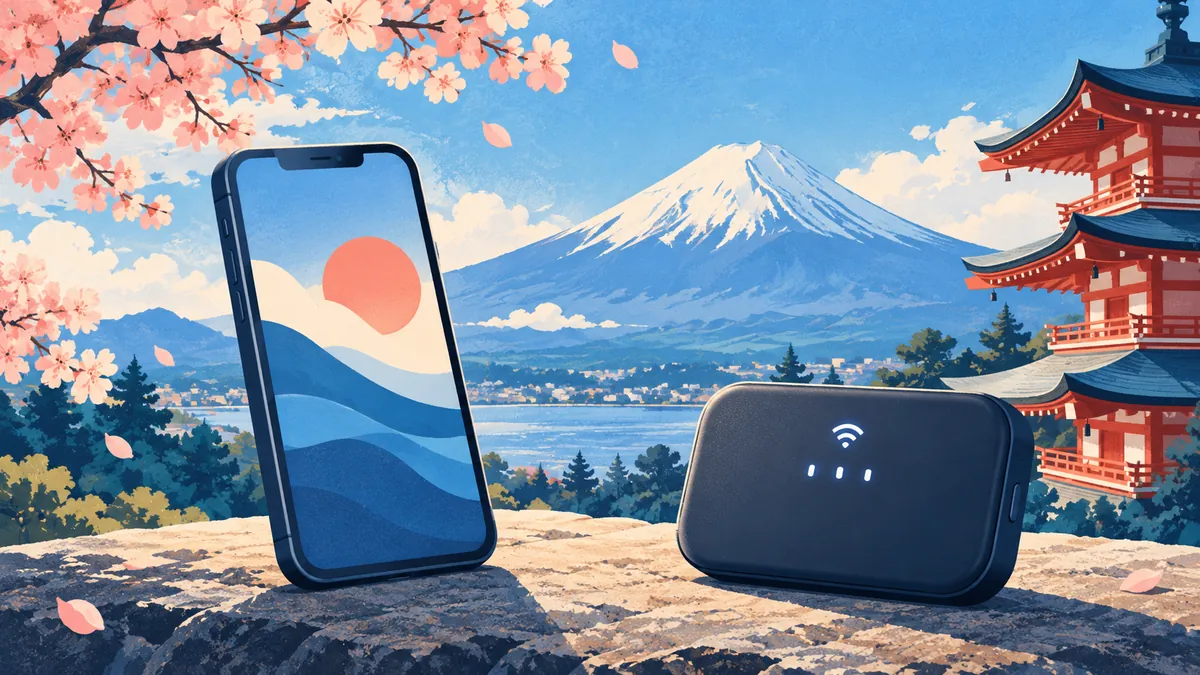
An eSIM connects a compatible phone directly to a mobile network. Pocket WiFi is a separate portable router that shares a mobile connection over WiFi. For Japan, the choice comes down to how many devices need data, whether your group will stay together and which equipment you want to carry.
A solo traveler with an unlocked, compatible phone may find an eSIM simpler. A group using several devices may prefer a shared router. Neither option automatically delivers better coverage: the selected service, network and location matter more than the format.
eSIM vs pocket WiFi in Japan at a glance
| Decision | Travel eSIM | Pocket WiFi |
|---|---|---|
| Equipment | Installed on your compatible phone | A separate router to carry and charge |
| Sharing | Depends on the plan's hotspot terms | Shares WiFi within range; device limits vary |
| Splitting up | Independent connection for each traveler with a plan | Users relying on one router must remain nearby |
| End of trip | Check the plan's expiry terms | Rental equipment may need returning |
Choose around your group's actual itinerary
Imagine two travelers visiting Tokyo together, then spending an afternoon separately. With an eSIM on each phone, both can check directions and messages. With one pocket WiFi router, the person carrying it keeps the shared connection; the other needs another way online.
For a family staying together, a router can reduce the number of separate plans to manage. However, everyone shares its allowance and battery. Count tablets and laptops as well as phones, then check the device limit and data rules before renting.
If one phone will act as the family hotspot, read the selected eSIM's tethering terms. Hotspot availability does not imply an unlimited sharing allowance. Our eSIM hotspot guide explains the checks.
Compare the complete trip cost
Compare the final cost for the same number of travelers and days. For pocket WiFi, include any delivery, collection, return or equipment charges. For eSIMs, include each person's plan and any additional allowance you expect to need. Review the final checkout total and currency.
A daily rental rate and a fixed-price eSIM are not directly comparable until you calculate the whole trip. Also check whether the rental counts collection and return days, and whether the eSIM's validity covers your arrival and departure times.
Do not choose only by the word unlimited. Check high-speed allowances, reduced-speed terms and whether tethering has a separate limit. See our Japan unlimited eSIM buying guide for a plan comparison checklist.
Check setup before departure
For an eSIM, confirm your exact device variant and carrier-unlock status using the compatibility checker. Read what starts the validity clock before installing: installation and activation are not always the same event.
For a router rental, confirm where and when it will reach you, how it charges and how it must be returned. Keep the instructions and a backup copy of your accommodation address available offline.
Questions travelers ask
Is an eSIM always cheaper?
No. Group size, trip length, data needs and rental extras change the comparison. Price the complete arrangement you will actually use.
Can an eSIM connect my laptop?
It may, through your phone's hotspot, if the phone and selected plan support tethering. Check the sharing allowance and account for phone battery use.
Which works better outside cities?
The format does not answer that. Check coverage information for the selected service and your itinerary. Country coverage is not a promise of signal on every route or inside every building.
Ready to compare? Browse Wanderly's Japan eSIM plans, then match the allowance to your trip with our Japan data budget guide. Read the plan and purchase checklist before paying.