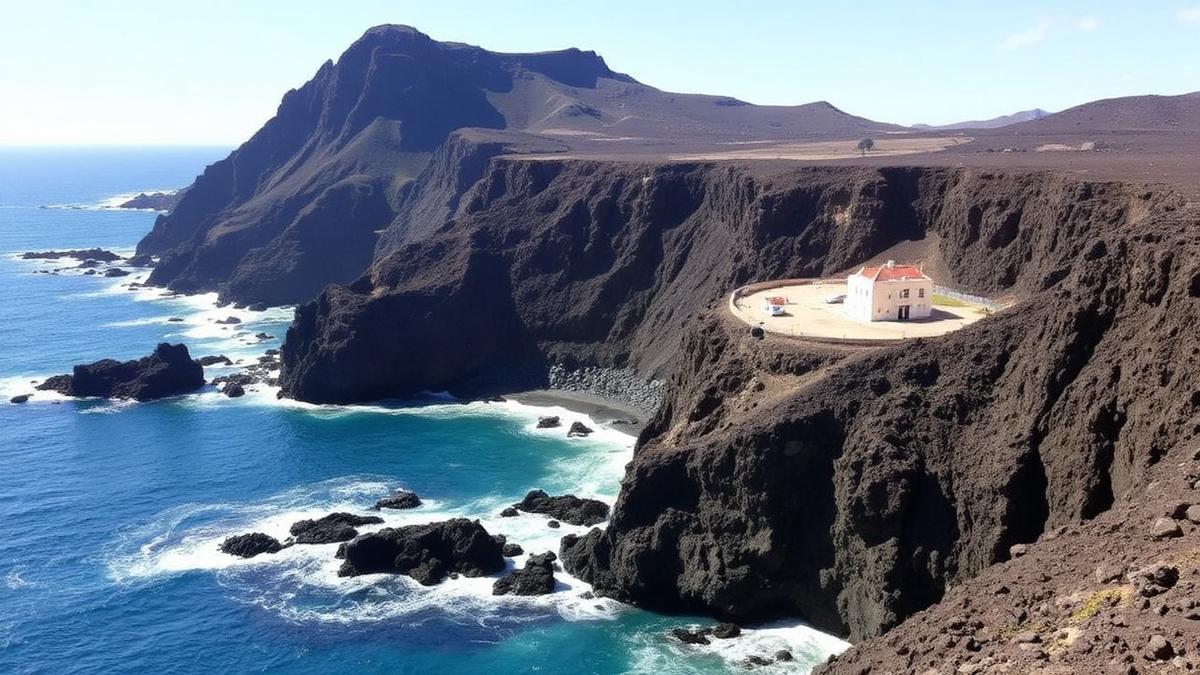
Cape Verde is an archipelago, and that shapes everything about connectivity here. The resort islands are well covered because tourism demanded it. The mountainous and less-developed islands are considerably patchier, and the inter-island ferries lose signal in open water.
If you're doing a single-island beach holiday, this is easy. If you're island-hopping or hiking Santo Antão, read on.
Cape Verde's mobile networks
CVMóvel (part of CV Telecom) is the incumbent with the widest island coverage.
Unitel T+ is the competitor, strong on the main tourist islands.
Travel eSIMs generally route through one of the two. On Sal, Boa Vista, Santiago and São Vicente either works well; on the smaller and more mountainous islands, CVMóvel tends to reach further.
Coverage, island by island
Sal — The best coverage in the country. Santa Maria, Espargos and the airport are all solid 4G, and the resort strip is comprehensive. Kite and windsurf beaches are covered.
Boa Vista — Good around Sal Rei and the main resorts. Thinner across the interior desert and on the long empty beaches — Praia de Chaves and the dune areas can drop out. Turtle-watching excursions at night often have no signal.
Santiago — Praia has strong coverage including the Plateau and Achada. Cidade Velha is fine. The mountain interior around Serra Malagueta and Assomada is patchier, and the winding roads have gaps.
São Vicente — Mindelo is well covered, including the marina and Laginha. Monte Verde has partial coverage.
Santo Antão — This is the one to plan around. Porto Novo and Ribeira Grande have signal, but the hiking valleys — Paul, Ribeira da Torre, Cova crater — are frequently offline. The terrain is steep and the valleys are deep, which does exactly what you'd expect to reception. Download offline maps and your trail routes before crossing from São Vicente.
Fogo — Coverage in São Filipe and along the main road. Chã das Caldeiras inside the crater is limited, and the volcano hike itself is largely offline.
Maio, Brava, São Nicolau — Basic coverage in the main settlements, unreliable elsewhere. These are the quiet islands in every sense.
Ferries between islands — Expect to lose signal in open water, particularly on the longer São Vicente–Santo Antão and Praia–Fogo crossings.
How much data do you need?
Cape Verde is a beach-and-hiking destination, so consumption is generally low — plus you'll be offline for parts of it anyway.
| Trip length | Light use | Typical use | Heavy use |
|---|---|---|---|
| One week | 1 GB | 2–3 GB | 5 GB |
| Ten days | 2 GB | 4 GB | 8 GB |
| Two weeks | 3 GB | 5 GB | 10 GB |
Most resorts have Wi-Fi, which handles photo uploads. See how much data you actually need.
A note for European travellers
Cape Verde is not in the EU, so EU roaming rules do not apply. If you're flying from Portugal, the UK or elsewhere in Europe on a package holiday, your home plan will roam at international rates here — often €5–15 per day. This catches out a lot of people who assume the Portuguese language connection means Portuguese roaming terms. It doesn't.
Setting up before you fly
Install at home on Wi-Fi a day or two before departure.
- 1Buy your plan and receive the QR code by email
- 2Scan it — Settings → Cellular → Add eSIM on iPhone
- 3Label the line "Cape Verde"
- 4Leave it switched off until you land
- 5At Amílcar Cabral (Sal), Praia or Boa Vista, enable the line and turn Data Roaming on for that line specifically
Data Roaming must be on for the travel eSIM and off for your home carrier line.
Walkthroughs: iPhone and Android. Trouble connecting? eSIM not working: 10 common fixes.
Practical tips for Cape Verde
- Confirm your plan covers Cape Verde specifically. Some Africa regional plans exclude it, and some Europe plans include it despite the geography — check before buying rather than assuming.
- Download offline maps and trails for Santo Antão and Fogo. Both are hiking destinations with genuine dead zones, and both are places where navigation matters.
- Ferry schedules change. Having data in port to check the day's sailings is more useful than it sounds.
- Portuguese and Kriolu are the working languages — offline translation helps outside the resorts.
- Check your phone is unlocked — Settings → General → About → Carrier Lock should read "No SIM restrictions". See which iPhones have eSIM.
- Keep your home line on for two-factor codes. iPhone 13 and newer run both at once — see the dual SIM guide.
Getting started
Wanderly plans for Cape Verde start at $1.99 with instant delivery — browse Cape Verde plans or see all pricing.
FAQ
Does eSIM work in Cape Verde? Yes. Travel eSIMs work across Cape Verde, routing through CVMóvel or Unitel T+. Coverage is strongest on Sal, Boa Vista, Santiago and São Vicente, and patchier on the smaller and more mountainous islands.
What is the best eSIM for Cape Verde? For a single-island beach holiday on Sal or Boa Vista, any plan works well — compare on price per gigabyte. If you are island-hopping or hiking Santo Antão, a plan routing through CVMóvel tends to reach further.
Does EU roaming work in Cape Verde? No. Cape Verde is not in the EU, so EU roaming rules do not apply. European travellers will be charged international roaming rates, typically €5–15 per day, unless they use a travel eSIM.
Is there mobile coverage on Santo Antão? Porto Novo and Ribeira Grande have signal, but the hiking valleys including Paul, Ribeira da Torre and the Cova crater are frequently offline. Download offline maps and trail routes before crossing from São Vicente.
How much data do I need for a week in Cape Verde? Around 2–3 GB covers typical use. Most resorts have Wi-Fi for photo uploads, and you will be offline for parts of any hiking or island-hopping itinerary.
Do Africa regional eSIM plans cover Cape Verde? Not always — some exclude it. Check the covered-country list before buying rather than assuming the archipelago is included.