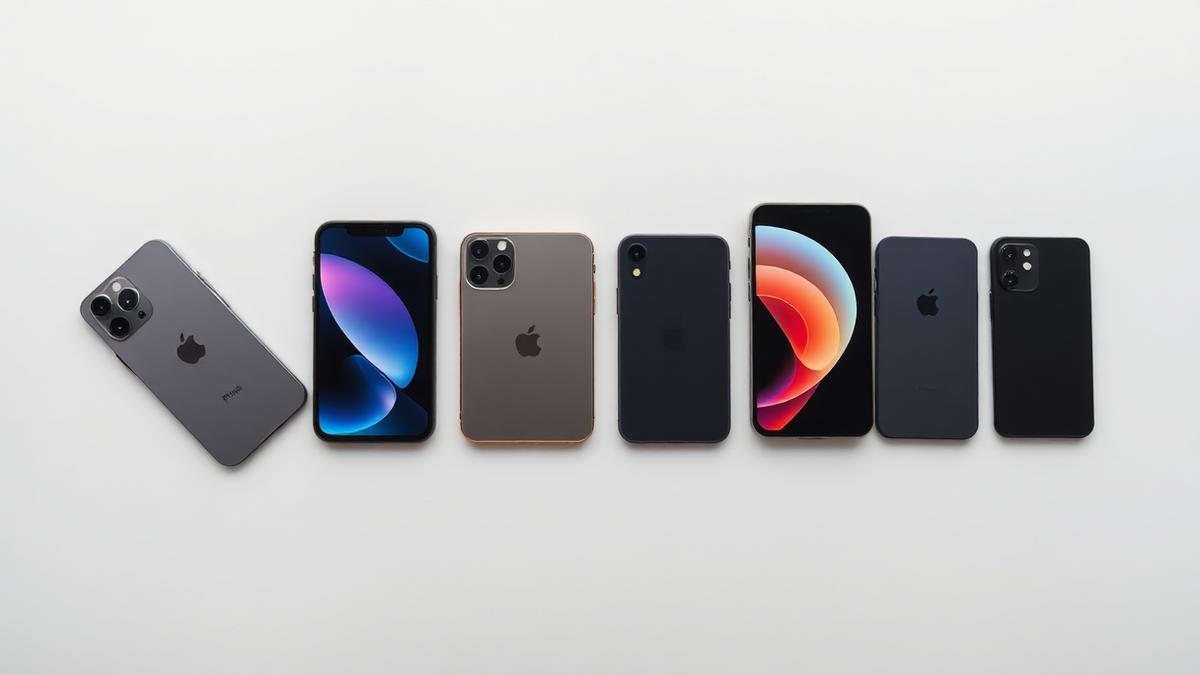
Short answer: every iPhone from the iPhone XR and XS onward supports eSIM, which means any iPhone released since September 2018. There are three exceptions that catch travellers out — mainland China models, some Hong Kong and Macao models, and the fact that newer US iPhones have *only* eSIM and no SIM tray at all.
Below is the complete list, the exceptions explained, and a 10-second check you can run on your own phone right now.
The 10-second compatibility check
Before reading any list, just check the phone in your hand:
- 1Open Settings
- 2Tap General → About
- 3Scroll down and look for a row labelled Available SIM, Digital SIM, or EID
If you see an EID number, your iPhone supports eSIM. If there is no EID row anywhere on that screen, it does not.
You can also try Settings → Cellular (or Mobile Data) and look for Add eSIM or Add Cellular Plan. If that option exists, you are good to go.
Full list of iPhones with eSIM
| iPhone model | Released | eSIM support | Notes |
|---|---|---|---|
| iPhone XR, XS, XS Max | 2018 | Yes | First eSIM iPhones. One eSIM + one physical SIM |
| iPhone 11, 11 Pro, 11 Pro Max | 2019 | Yes | One eSIM + one physical SIM |
| iPhone SE (2nd gen) | 2020 | Yes | One eSIM + one physical SIM |
| iPhone 12, 12 mini, 12 Pro, 12 Pro Max | 2020 | Yes | One eSIM + one physical SIM |
| iPhone 13, 13 mini, 13 Pro, 13 Pro Max | 2021 | Yes | First with dual eSIM — two eSIMs active at once |
| iPhone SE (3rd gen) | 2022 | Yes | Dual eSIM capable |
| iPhone 14 series | 2022 | Yes | US models are eSIM-only — no SIM tray |
| iPhone 15 series | 2023 | Yes | US models eSIM-only |
| iPhone 16 series | 2024 | Yes | US models eSIM-only |
| iPhone 17 series & iPhone Air | 2025 | Yes | iPhone Air is eSIM-only in every region |
Anything older than the iPhone XR — the iPhone X, 8, 7, SE (1st gen) and earlier — has no eSIM support and never will. It is a hardware limitation, not something a software update can fix.
The three exceptions worth knowing
1. Mainland China models
iPhones sold in mainland China have historically shipped with two physical SIM trays and no eSIM. If you bought your iPhone in Beijing, Shanghai or anywhere else on the mainland, run the EID check above before buying a travel eSIM. This affects models across the XS through recent generations.
2. Hong Kong and Macao models
Some Hong Kong and Macao variants — particularly certain iPhone XS Max and iPhone 11 models — also shipped with dual physical SIM instead of eSIM. Again, the EID check settles it.
3. US models have no SIM tray at all
Since the iPhone 14, iPhones sold in the United States have no physical SIM slot. This is only a problem in the rare case where you land somewhere and want to buy a local physical SIM card — you simply cannot. For travellers this is usually an argument *for* eSIM rather than against it, since a travel eSIM is the only option anyway.
Dual eSIM: what changed with the iPhone 13
The iPhone 13 introduced a genuinely useful upgrade: you can have two eSIMs active simultaneously, and store up to eight or more eSIM profiles on the device to switch between.
In practice this means you can keep your home carrier line active for calls and texts while a travel data eSIM handles all your internet. On an iPhone 12 or older you can still do this — one eSIM plus your physical SIM — but you cannot run two eSIMs at once.
If you travel across multiple countries, this matters. You can pre-install eSIMs for each leg of the trip before you leave and switch between them from Settings without needing a connection to download anything.
What about iPads and Apple Watch?
iPads have supported eSIM since the iPad Pro (3rd generation, 2018), and all cellular iPad Air, iPad mini and iPad Pro models since then include it. The iPad Air (4th gen onwards) and iPad mini (5th gen onwards) all work with travel eSIMs.
One catch: the iPad must be a cellular model. Wi-Fi-only iPads have no modem and no EID, no matter how new they are.
Apple Watch has used eSIM since Series 3, but watch eSIMs are tied to your carrier plan and cannot use travel eSIMs from providers like Wanderly.
Your iPhone also needs to be carrier-unlocked
This trips up more travellers than model compatibility does. Even a brand-new iPhone 17 will refuse a travel eSIM if it is locked to a carrier.
To check: Settings → General → About → Carrier Lock. You want it to say No SIM restrictions.
If it says anything else, contact your carrier and request an unlock. In the US, carriers are generally required to unlock a device once it is paid off. It usually takes a couple of days, so do not leave it until the night before your flight.
Once you have confirmed compatibility
If your iPhone passes both checks — it has an EID and no SIM restrictions — installation takes about two minutes. Buy a plan for your destination, receive a QR code by email, and scan it.
Our step-by-step walkthrough covers the whole process: How to Install an eSIM on iPhone. On Android, see the Android installation guide instead.
You can also check your specific model on our device compatibility page, or browse plans by destination if you already know where you are heading.
FAQ
Does the iPhone 11 have eSIM? Yes. Every iPhone 11, 11 Pro and 11 Pro Max supports eSIM, with one exception — units sold in mainland China, and some Hong Kong and Macao variants, shipped with dual physical SIM instead. Check Settings, General, About for an EID number to confirm.
Does the iPhone 12 support eSIM? Yes. All iPhone 12, 12 mini, 12 Pro and 12 Pro Max models support one eSIM alongside one physical SIM. Mainland China models are the exception.
Does the iPhone 13 have eSIM? Yes, and the iPhone 13 was the first iPhone to support two active eSIMs at the same time. You can store multiple eSIM profiles and switch between them in Settings.
Does the iPhone XR support eSIM? Yes. The iPhone XR and XS were the first eSIM-capable iPhones, released in September 2018. Anything older than these models has no eSIM hardware.
Which iPhones do not support eSIM? The iPhone X, iPhone 8, iPhone 7, iPhone SE first generation and every earlier model have no eSIM. Additionally, iPhones purchased in mainland China, and some Hong Kong and Macao variants, use dual physical SIM instead of eSIM.
How do I know if my iPhone is eSIM compatible? Go to Settings, then General, then About, and scroll down. If you see an EID number listed, your iPhone supports eSIM. If there is no EID, it does not.
Do I need to unlock my iPhone to use a travel eSIM? Yes. Check Settings, General, About, Carrier Lock. It must say No SIM restrictions. A carrier-locked iPhone will reject a travel eSIM even if the model supports eSIM.
Can I use a travel eSIM on my iPad? Yes, if it is a cellular iPad Pro from 2018 onwards, or any cellular iPad Air, iPad mini or standard iPad released since. Wi-Fi-only iPads cannot use eSIMs.