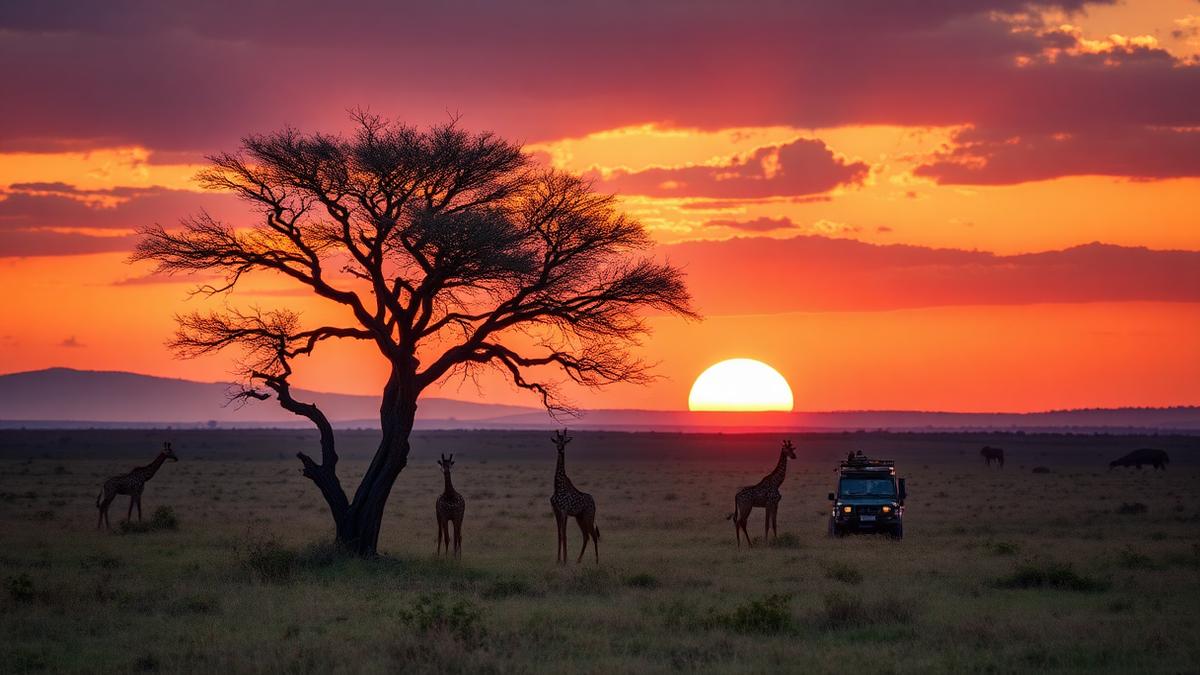
Kenya is one of the easier African countries to stay connected in. Mobile money made deep network coverage a commercial necessity years before tourism did, so Safaricom in particular reaches into places you would not expect — including large parts of the Maasai Mara.
That changes the calculation. In Kenya you're not planning around dead zones so much as choosing the right amount of data.
Kenya's mobile networks
Safaricom is dominant, with the largest subscriber base and by far the widest coverage, including 5G in Nairobi, Mombasa and several other cities. It's the network behind M-Pesa, which is why its rural reach is so unusually good.
Airtel Kenya is the main competitor, generally cheaper locally, with solid urban coverage and thinner rural reach.
Telkom Kenya is a smaller third player, mostly relevant in urban areas.
Travel eSIMs in Kenya usually connect through Safaricom or Airtel. For safari itineraries, a plan routing through Safaricom is meaningfully better — that's where the conservancy and reserve coverage lives.
Coverage, region by region
Nairobi — Excellent, with 5G across much of the city. Westlands, Kilimani, the CBD and Karen are all strong. Nairobi National Park has usable coverage throughout, which surprises people.
Maasai Mara — Better than most visitors expect. The main conservancies and most permanent camps have reliable signal, and many lodges sit within Safaricom's footprint. Coverage thins in the western and southern reaches and drops in river valleys and gorges. On game drives you'll move in and out of signal — fine for a WhatsApp message, unreliable for a video call.
Amboseli — Reasonable near the main gates and lodges, patchy deeper in the park. Kilimanjaro views are more reliable than the signal.
Diani and the South Coast — Strong throughout. Diani has good 4G and often 5G; the beach hotels are well covered.
Mombasa — Comprehensive coverage including the old town and Nyali.
Lamu — Workable in Lamu town and Shela. Weaker on the boat crossings and the outer islands.
Samburu and the northern circuit — Noticeably thinner. Signal around the main lodges, long gaps between. Download offline maps.
Lake Nakuru and Naivasha — Good coverage in both, including most lakeside lodges.
Mount Kenya — Coverage at the trailheads and lower huts, unreliable higher up. Don't plan on being connected above the treeline.
Turkana and the far north — Expect very little. This is genuine wilderness by network standards.
How much data do you need?
Safari travel is photo-heavy and streaming-light. Most days you're in a vehicle without much screen time, then uploading in the evening — often over lodge Wi-Fi, which is increasingly decent.
| Trip length | Light use | Typical use | Heavy use |
|---|---|---|---|
| One week | 1–2 GB | 3 GB | 5 GB |
| Ten days | 3 GB | 5 GB | 8 GB |
| Two weeks | 3–5 GB | 8 GB | 15 GB |
"Typical" means maps, WhatsApp, email, social media and moderate photo sharing. If you're uploading full-resolution safari photos daily over mobile data rather than lodge Wi-Fi, budget considerably more — wildlife photography files are large.
Fuller breakdown: how much data you actually need when travelling.
Kenya-only or a regional plan?
If Kenya is your only stop, buy a Kenya plan — cheaper per gigabyte.
If you're combining Kenya with Tanzania — extremely common, whether Mara into Serengeti or Nairobi to Kilimanjaro or Zanzibar — check an East Africa regional plan before buying two local ones. The border crossing is invisible to your phone, and you avoid buying a second eSIM mid-trip while sitting at Namanga.
Setting up before you fly
Install at home on Wi-Fi a day or two before you leave. The profile downloads then; the plan generally doesn't start counting until it connects to a Kenyan network.
- 1Buy your plan and receive the QR code by email
- 2Scan it — Settings → Cellular → Add eSIM on iPhone
- 3Label the line "Kenya"
- 4Leave it switched off until you land
- 5At JKIA or Moi International, enable the line and turn Data Roaming on for that line specifically
That last step catches people out constantly. Data Roaming must be on for the travel eSIM — it's roaming from the network's perspective — while staying off for your home carrier line.
Walkthroughs: installing an eSIM on iPhone and on Android. If it doesn't connect, try eSIM not working: 10 common fixes.
Practical tips for Kenya
- M-Pesa needs a Kenyan number, which no travel eSIM reliably gives you — our Kenya plans with calls and texts do include a number, but it is assigned after purchase and may not be Kenyan. If you specifically want M-Pesa, you'll need a local SIM as well — but cards are widely accepted in tourist areas and most travellers manage without it.
- Download offline maps for the Mara and Samburu. Coverage is good but not continuous, and gorges and river valleys drop out.
- Keep your home line on for two-factor codes. On an iPhone 13 or newer you can run both lines simultaneously — see the dual SIM guide.
- Check your phone is unlocked before flying: Settings → General → About → Carrier Lock should say "No SIM restrictions". Full model list in which iPhones have eSIM.
- Safari vehicles drain batteries fast with constant signal searching and camera use. Bring a power bank; many vehicles have charging but not all.
- Lodge Wi-Fi is often better than you expect — save large uploads for the evening rather than burning mobile data in the field.
Getting started
Wanderly plans for Kenya start at $1.99 with instant delivery — browse Kenya plans or see all pricing.
FAQ
Does eSIM work in Kenya? Yes. Travel eSIMs work well in Kenya, usually connecting through Safaricom or Airtel. Kenya has some of the strongest mobile coverage in Africa, including 5G in Nairobi and Mombasa.
What is the best eSIM for Kenya? For safari itineraries, choose a plan routing through Safaricom — it has the widest rural and conservancy coverage. For city and coast trips, either Safaricom or Airtel works well, so compare on price per gigabyte.
Is there phone signal in the Maasai Mara? Yes, better than most visitors expect. The main conservancies and most permanent camps have reliable Safaricom coverage. Signal thins in the western and southern reaches and drops in river valleys, so expect to move in and out of service on game drives.
How much data do I need for a week in Kenya? Around 3 GB covers typical use — maps, WhatsApp, email and social media. Light users manage on 1–2 GB. If you plan to upload safari photos over mobile data rather than lodge Wi-Fi, budget 5 GB or more.
Can I use a Kenya eSIM in Tanzania? Only with an East Africa regional plan. A Kenya-only plan stops at the border. If your trip covers both countries, a regional plan is usually cheaper than buying two.
Can I use M-Pesa with a travel eSIM? No. M-Pesa requires a Kenyan phone number. Our Kenya catalogue does include plans with calls and texts, but the number they come with is assigned after purchase and is not guaranteed to be Kenyan. Cards are widely accepted in tourist areas, so most visitors manage without it.
Do I need to register a travel eSIM in Kenya? No. SIM registration rules apply to locally purchased SIM cards. A travel eSIM roams onto the network and requires no local paperwork.
Combining countries on the same trip? Use the Africa eSIM coverage and pricing guide to compare regional and country-specific options.